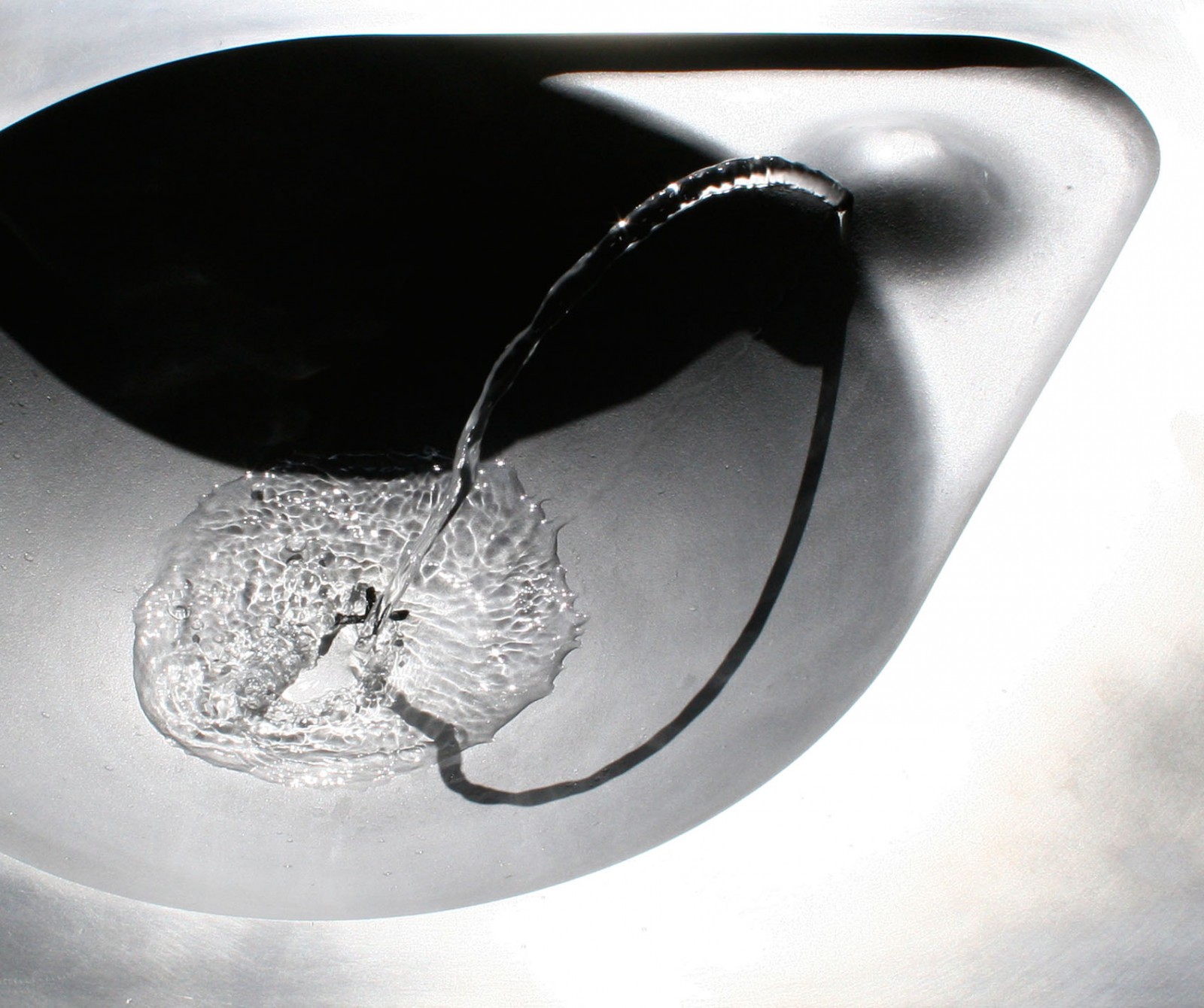
CONSOLE- This freestanding all aluminum prototype is an extension of my current Infinite Fitting basin product line. Complete with foot pedals and an integral spout cast into the top, the piece is a marriage of water, light, shadow and the austere elegance of raw aluminum. I have long been a fan of Donald Judd's work, especially the 100 Mill Aluminum works in the Artillery Sheds at Marfa, TX. Here, I am pushing from the known and inspirational into a new hybrid form. The piece is impeccably crafted with an innovative one-piece sandcast aluminum vessel/countertop that has a machined surface. The Console is the latest furniture project that continues to explore the spatial, architectural and programmatic implications when a fixture is taken as freestanding and able to be moved in space. Still tethered to a building and infrastructure, and not quite a vehicle, these works push back at architecture and ask for other ways to think of space. CONSOLE, detail- This shows the minimal integral cast spout producing a graceful arc of water towards my signature "X" drain. Please note the subtle play of the interior "as-cast" rough texture and the machined surface of the counter. This is a single cast piece of aluminum. The water spout for the basin is integral to the cast surface, the calibrated flow makes a perfect arc to the drain, and is operated with foot pedals.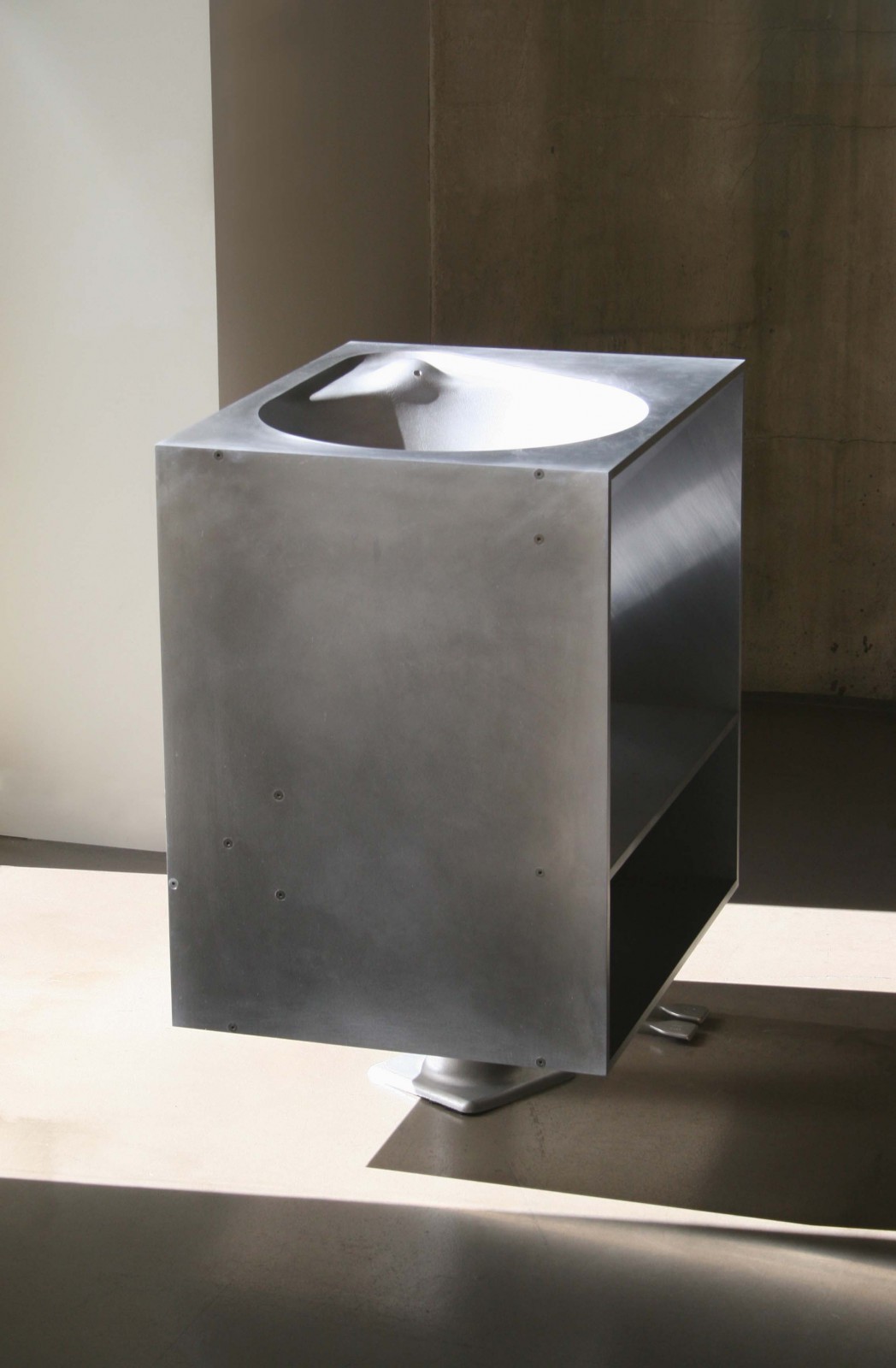


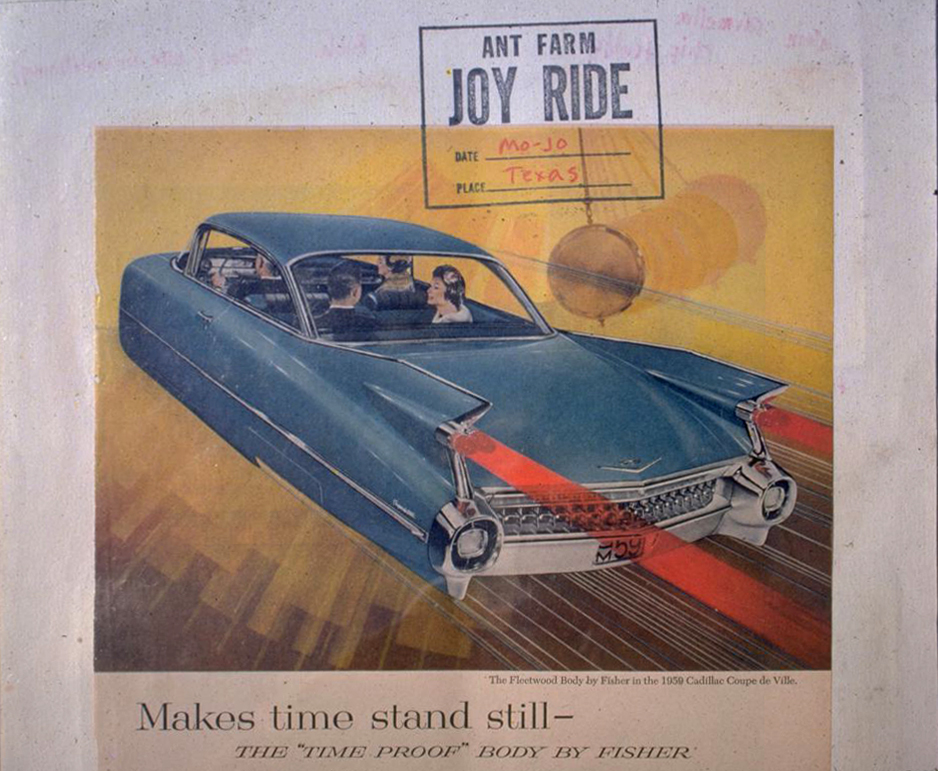
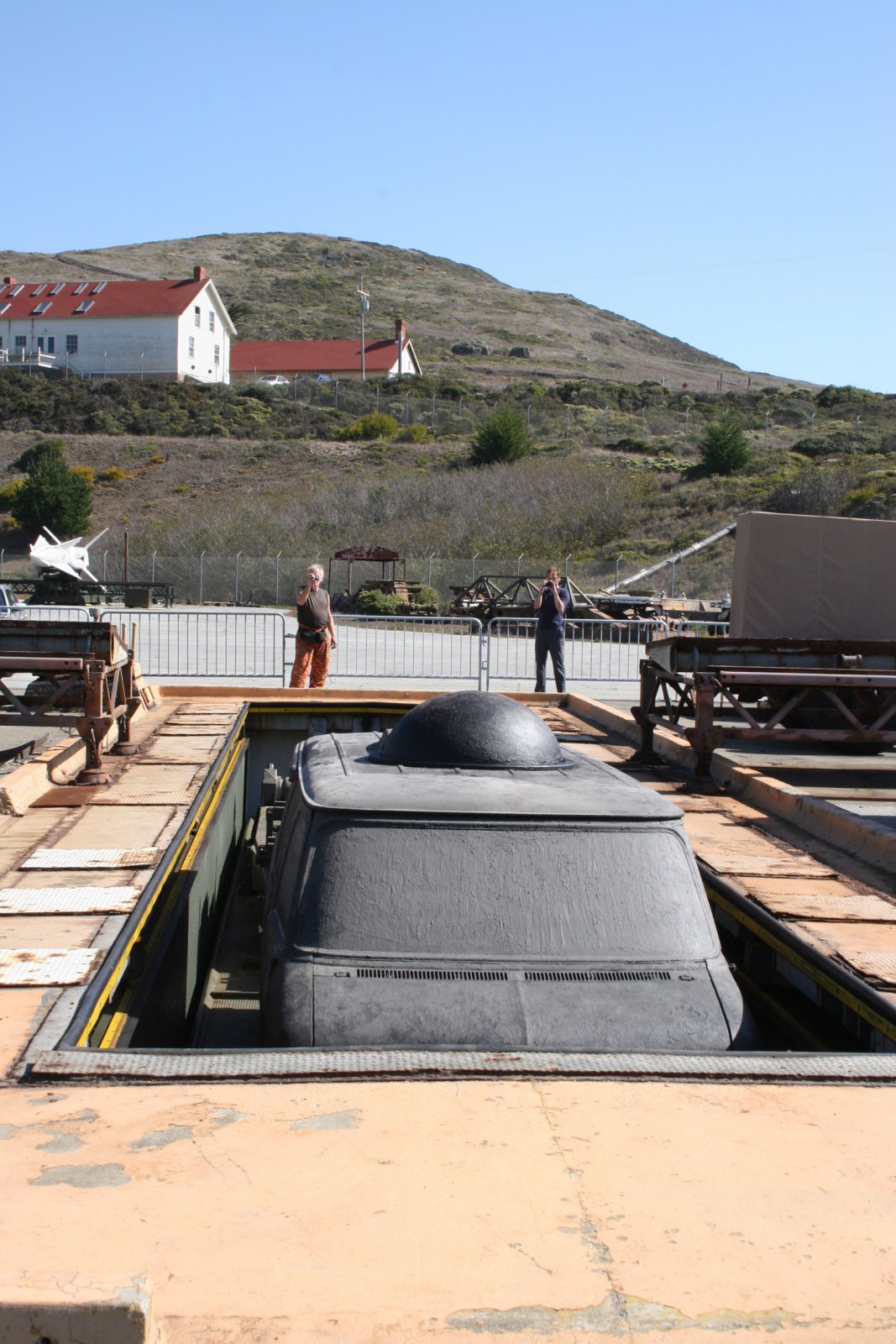
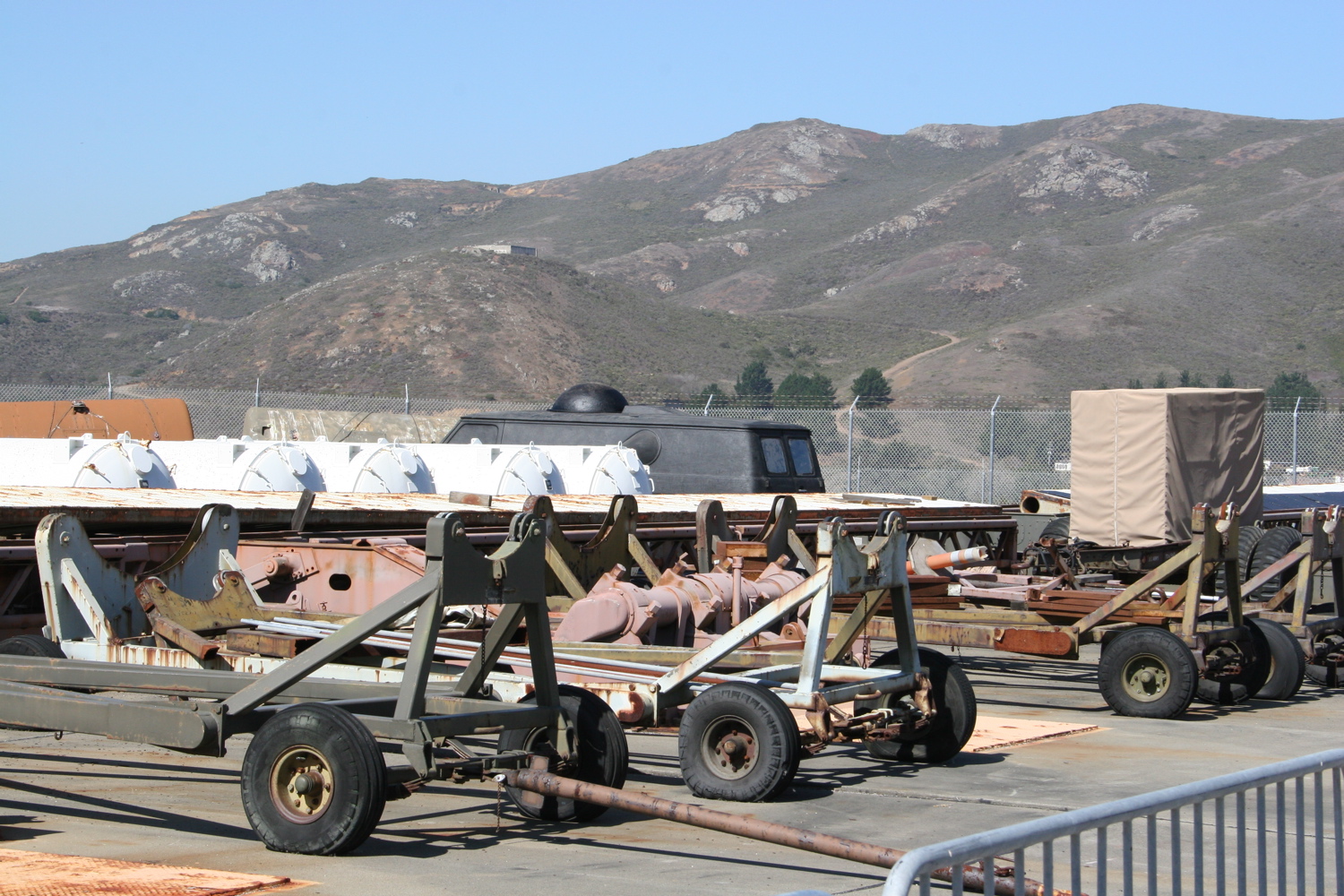
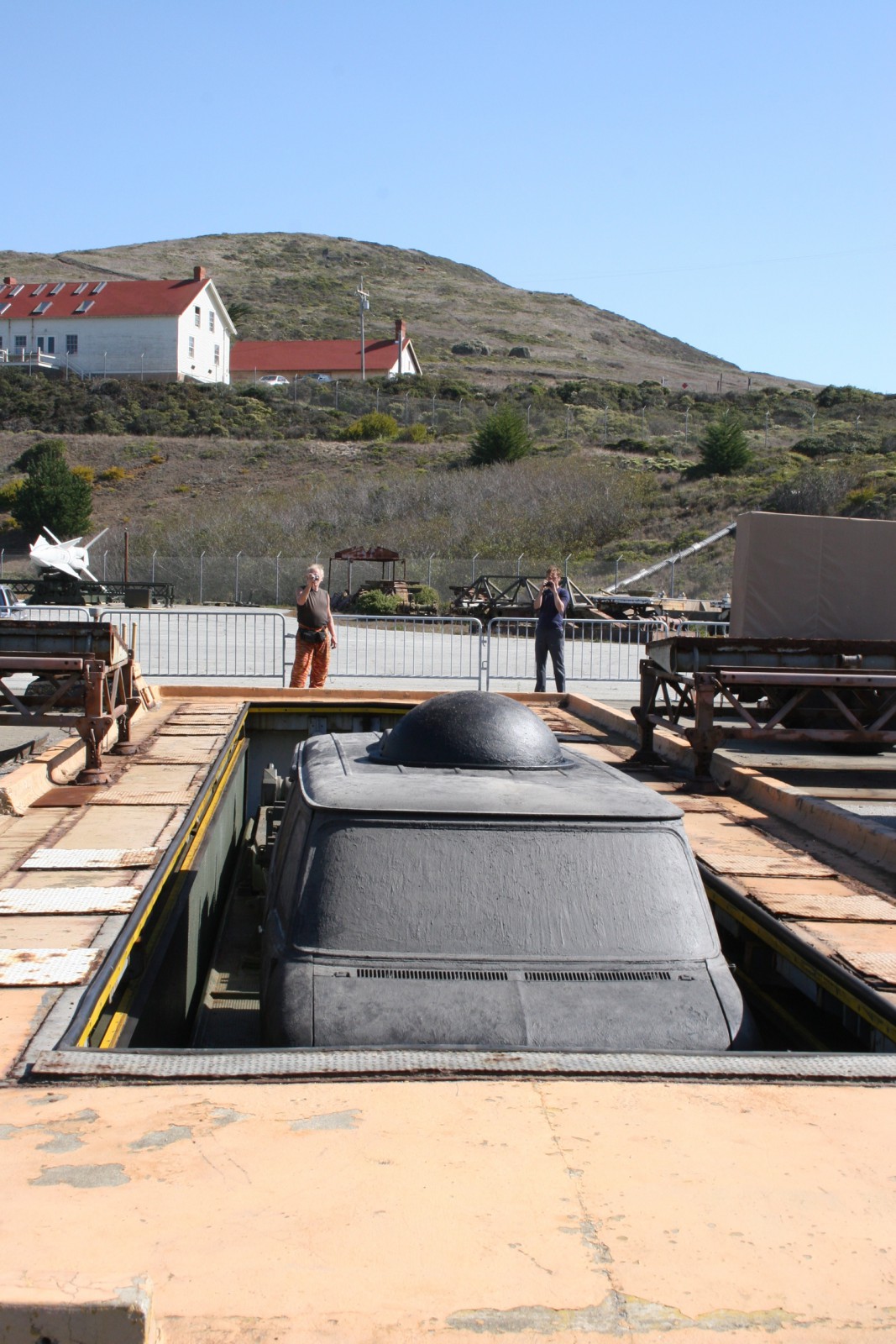
The re-imagined Ant Farm Media Van v.08[Time Capsule] as a post-internal combustion vehicle, in the context of current social media, draws inspiration from from Ant Farm's "Joy Ride," and other original Ant Farm works such as the Citizen's Time Capsule. Collaboration with Chip Lord and Curtis Schreier, and commissioned by SFMOMA. Joy Ride by Ant Farm, Circa 1970, appropriating a Fisher Body ad from 1959. Media Van & crew, circa 1971 DISCOVERY video documentation. After an unknown period of storage, or lost since 1972, The Media Van emerges from Nike Base SF-88 on an missile elevator. Media Van [Time Capsule] with obsolete military equipment at the Nike Missile Base. Media Van [Time Capsule] and stockpiled Nike missiles. 2008
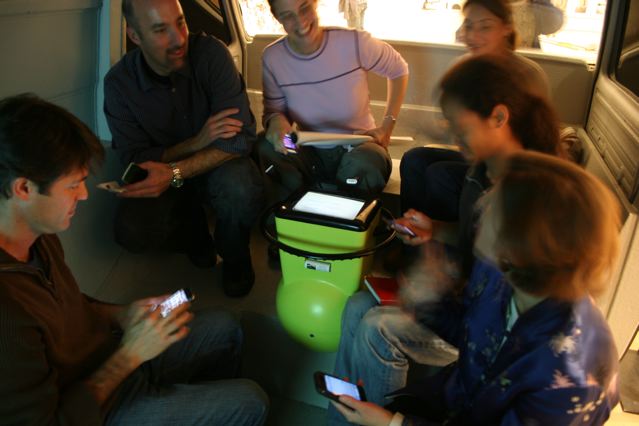
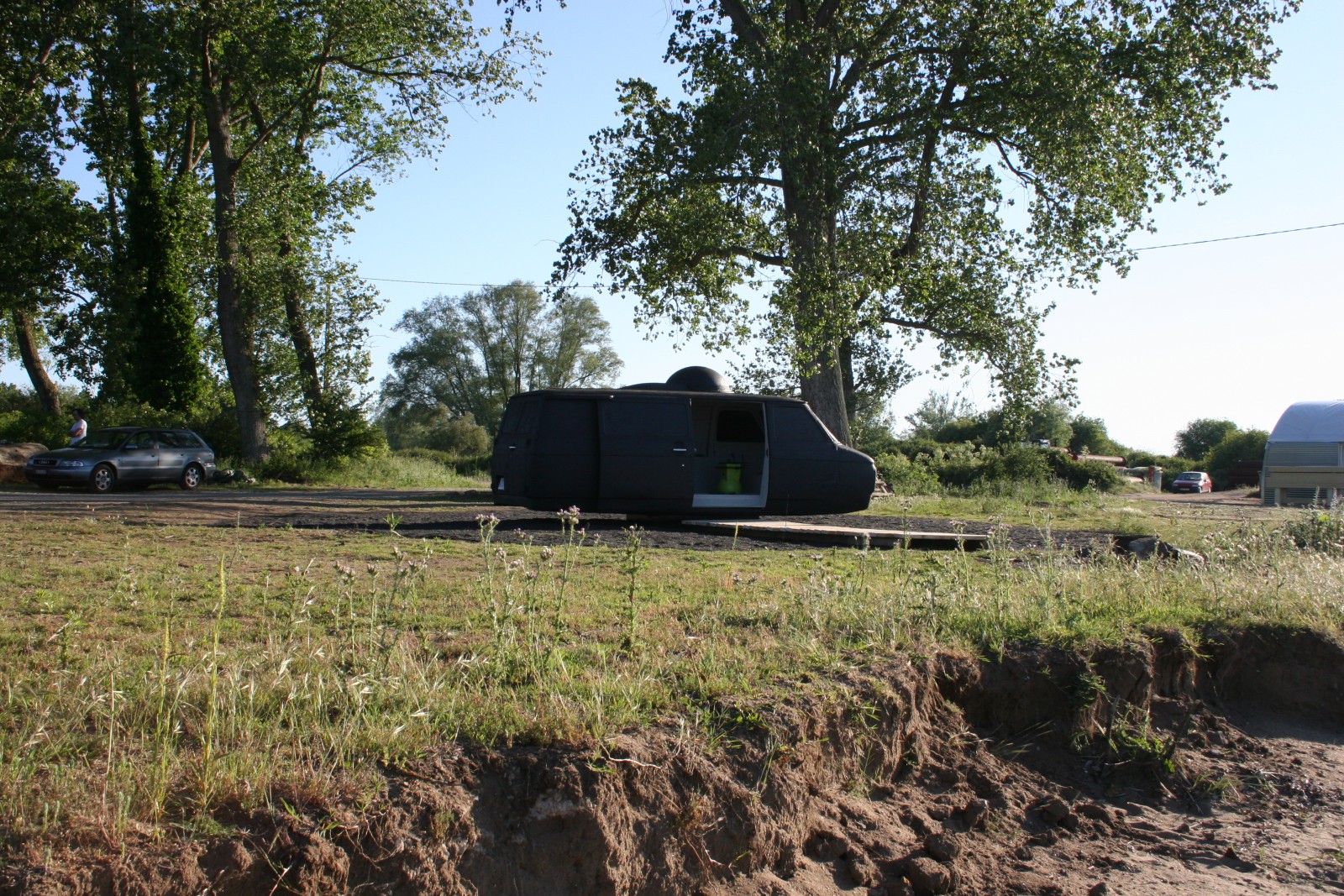
Media Van v.08 [Time Capsule] installation view at SFMOMA, 2008. Inside the Ant Farm Media Van v.08 [Time Capsule], guests are gathered around the media HUQQUH and taking a toke at SFMOMA. Random files from their digital devices are being copied onto a hard drive for the future. A receipt is issued for each file copied, acknowledging the donation with a thumbnail image, file number, time and date. This receipt could be traded in for a discount in the museum store. The MVv.08 has subsequently been traveling around the world. Here seen on the bank of Loire River near Nantes, France. Part of the Estuaire Biennial. A discrete digital Time Capsule has been produced for each location.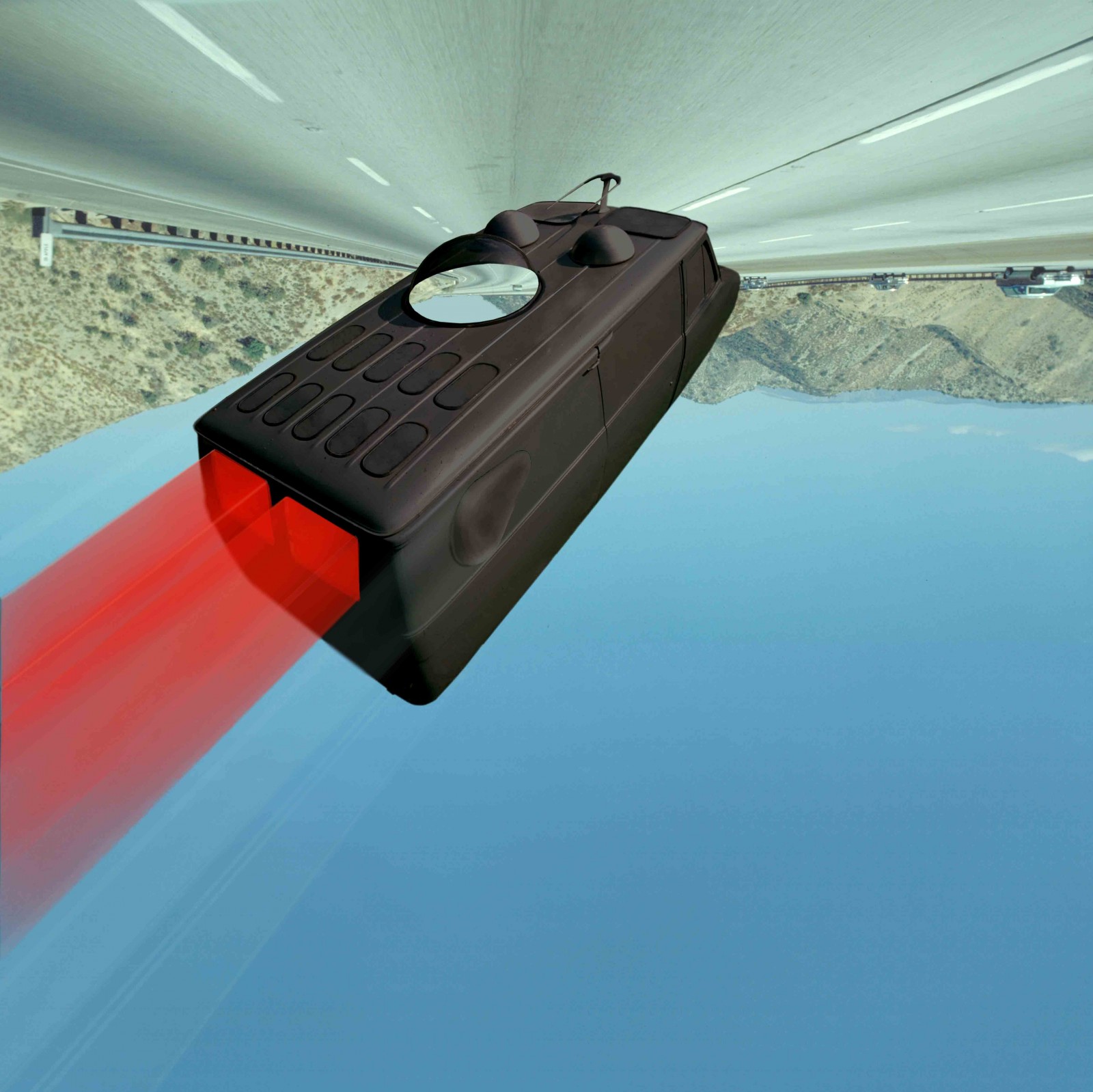


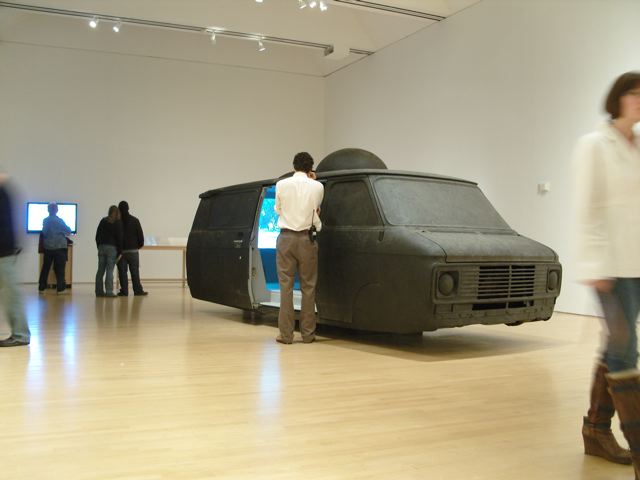


TIME CAPSULE TRIPTYCH. Installation view with the DISCOVERY video on the left, INVENTORY, and COLOCATION DREAM video on the right. Installation detail showing downloaded files from the Media HUQQUH, with thumbnail image, file number date and time. The Media Van rising on elevator from storage in the bunker below. Video still from Colocation Dream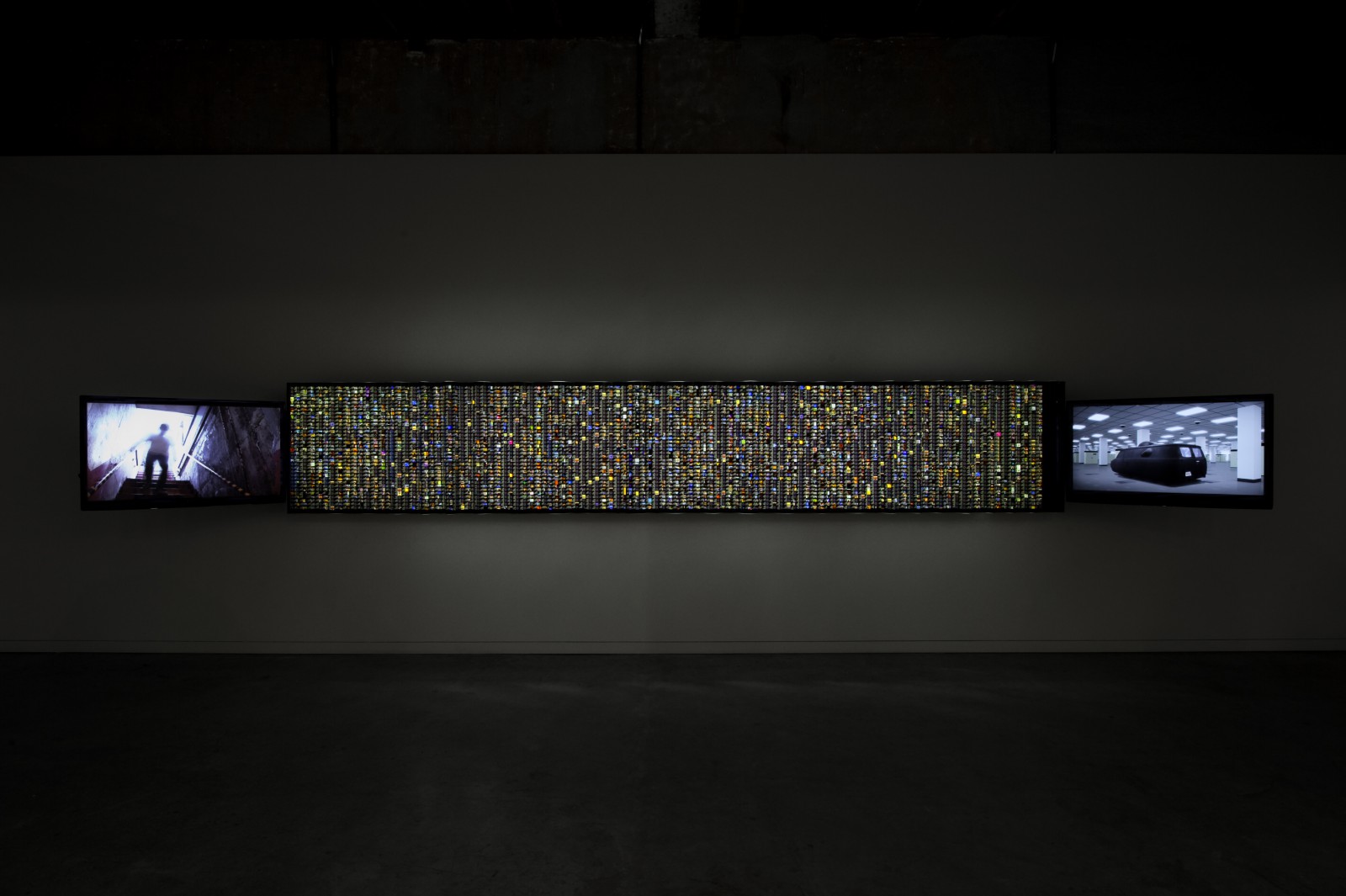



A small plaza space at the corner where Fountain Alley meets South 2nd Street created by reclaiming two parking spaces in the adjacent lot.
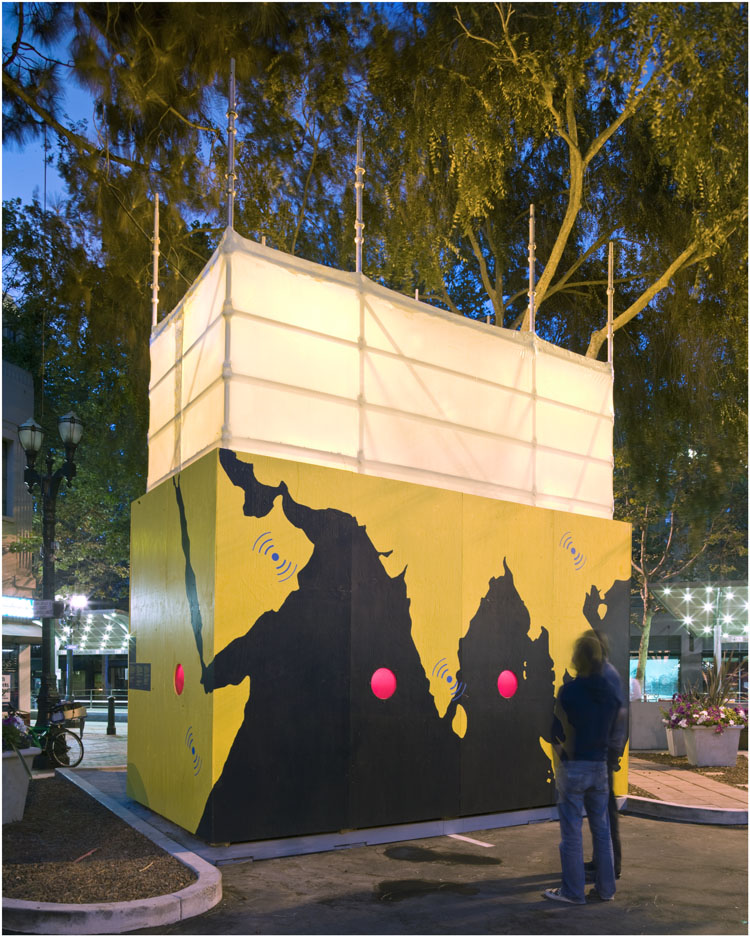
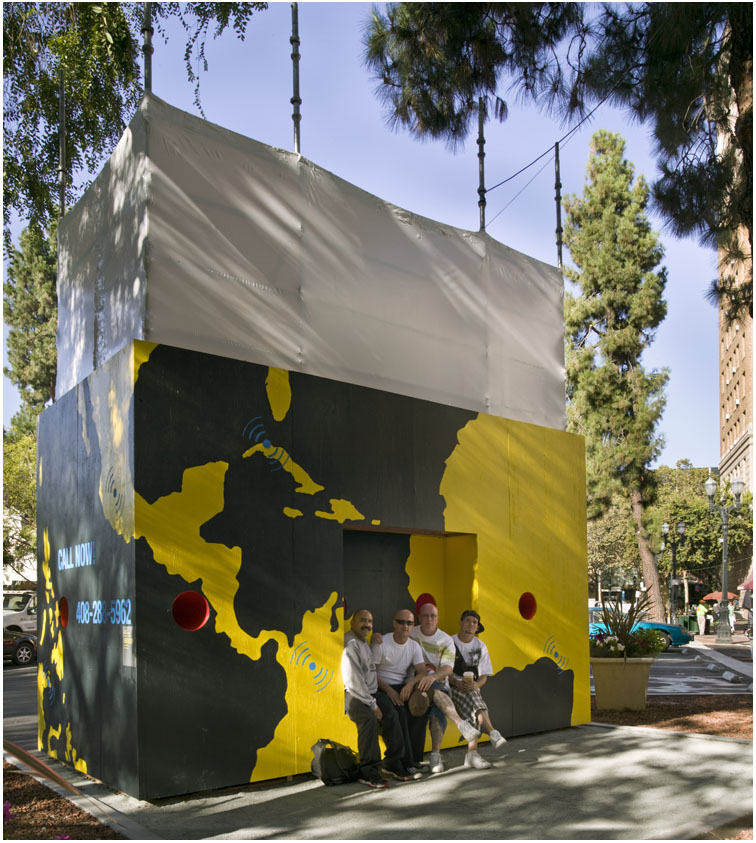
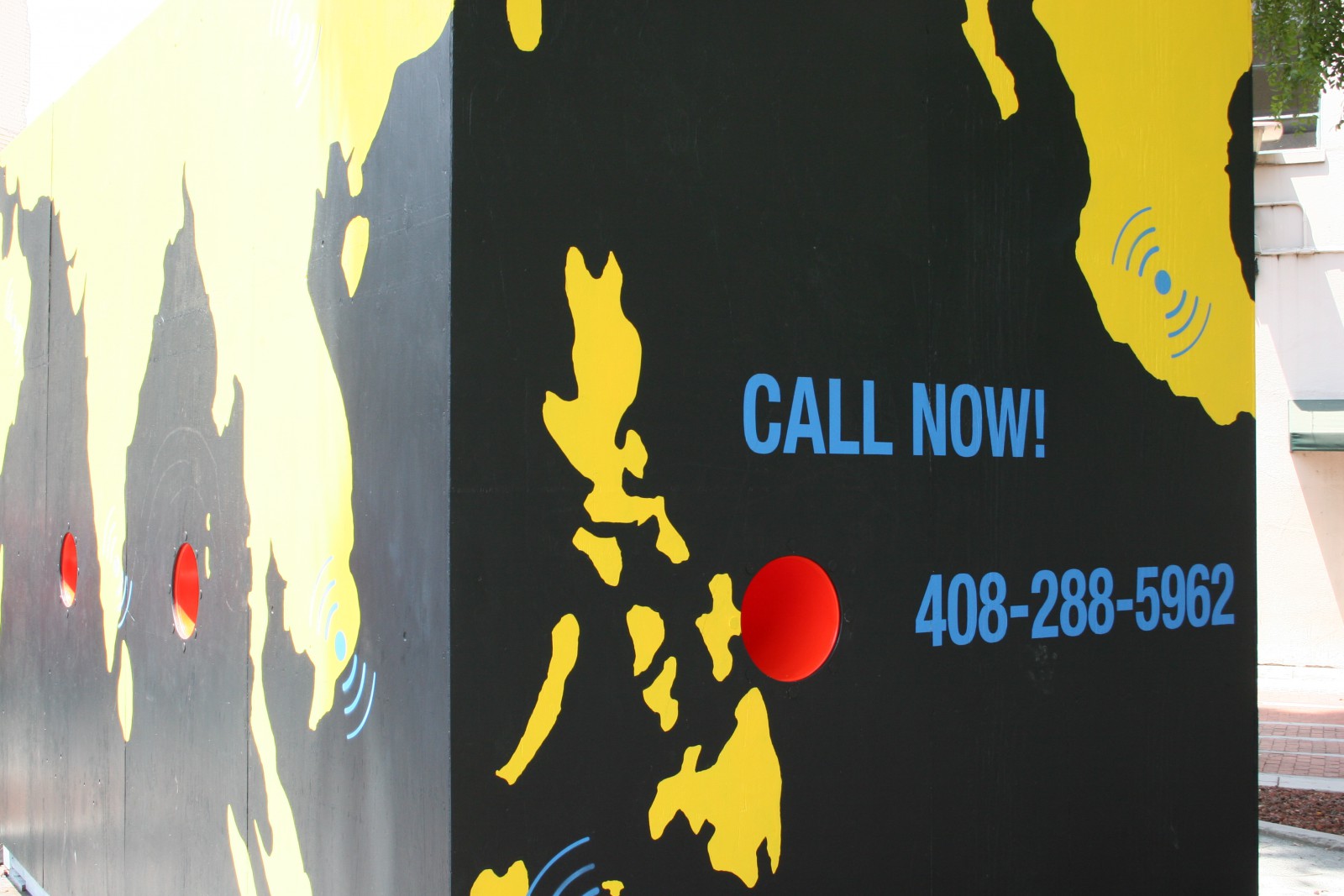
HELLO, SAN JOSE!, a collaboration with Chip Lord, was a temporary urban intervention into an existing parking lot adjacent to a transit corridor and within the “Historic District” of downtown San Jose. The project expanded a pedestrian space from the adjacent Fountain Alley via both a physical structure and a sound environment. The installation was designed as a babelesque media kiosk that would deliver streaming “local” radio stations as available from around the world, 24 hours a day. At any given time, there could be several languages heard at once, with call letters such as: NGHE VOV, 西湖之声, FRCN VOU, UDEA, XHPO, XHGES some being familiar to the immigrant population of San Jose. Additionally, a simple phone line allowed people to call in and broadcast directly from the structure similar to as a radio station. Six channels of sound were made visible with fluorescent orange megaphones and could be “mixed” by the public as they walked around the structure. Parking lot view. Hanging out, listening, & posing. Listening alcove. Detail of Listening Alcove. Two speakers are located within the listening alcove. Calling this number enabled passersby to broadcast just as the radio stations. On occasion, they would discover the audio feedback with delight. Passersby were encouraged to call in. Once their phone connected, they could broadcast from this speaker. Detail of the kiosk and shrink wrapped lantern. Made from a conventional scaffolding system the upper part was shrink-wrapped and internally lit as beacon at night. During the day, the same surface acted as a screen for the play of shadows from the adjacent trees. In our interactions with the passersby revealed people from Guatemala, the Philippines, Eritrea, Vietnam, India, and many parts of Mexico about the distant stations they were familiar with. There were numerous broadcast messages left on the answering machine, most were playful and funny, only one was vulgar. Of particular delight was the discovery by the public of a pulsing audio feedback loop that could be created by placing one’s cell phone into the megaphone of the speaker. Many of the broadcast messages were incorporated into a closing audio mix expanding the “Ghost Zocalo” composed by sound designer Jim McKee and played at the closing reception.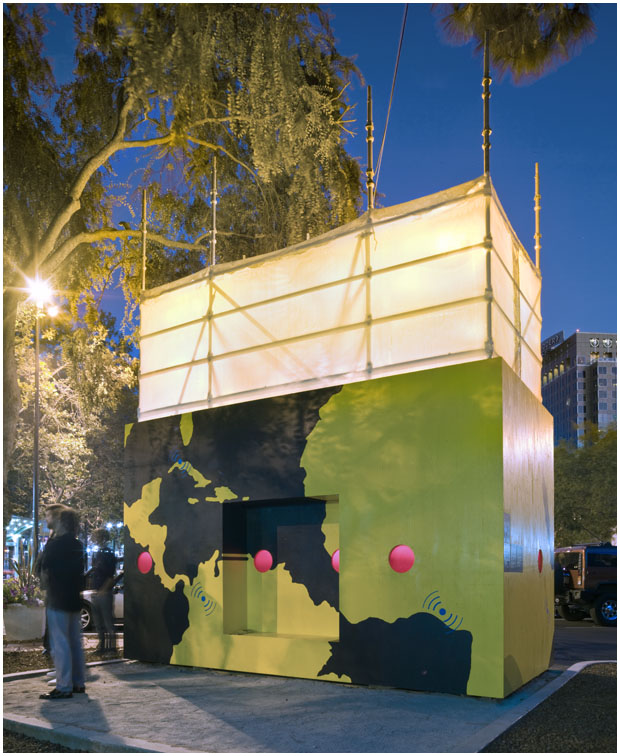



MARIA DEL CAMINO AND SUPERTASKS
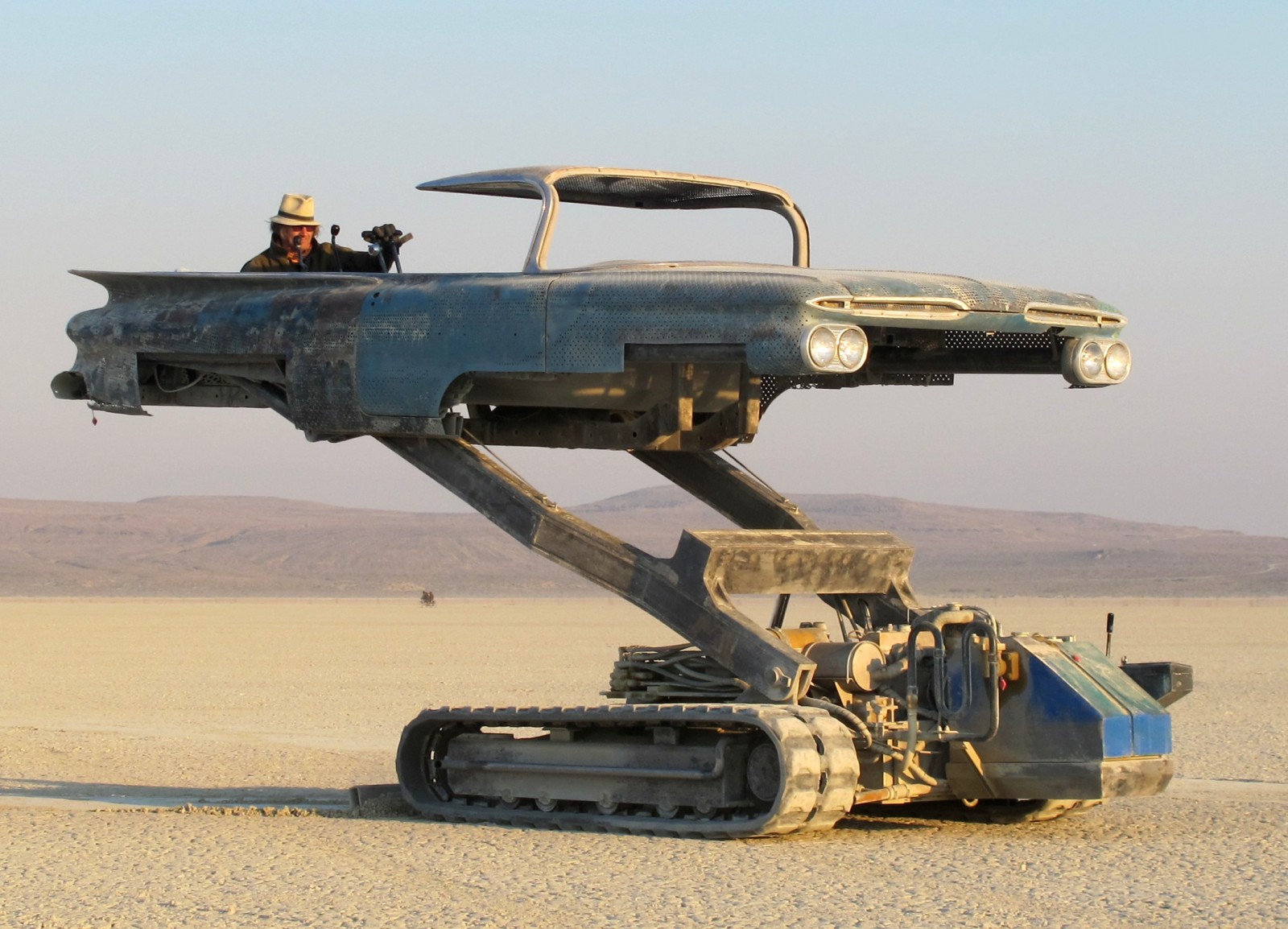
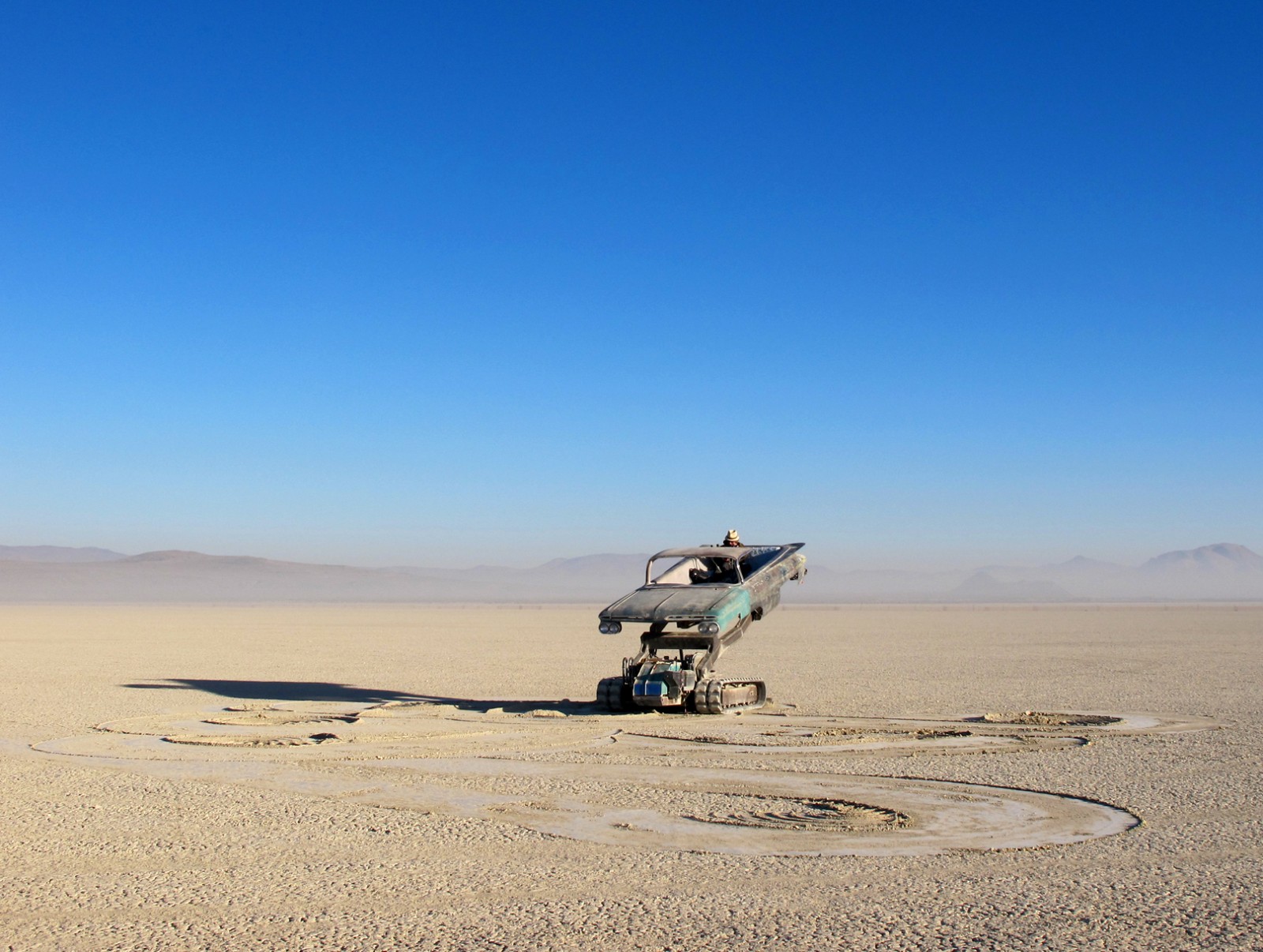
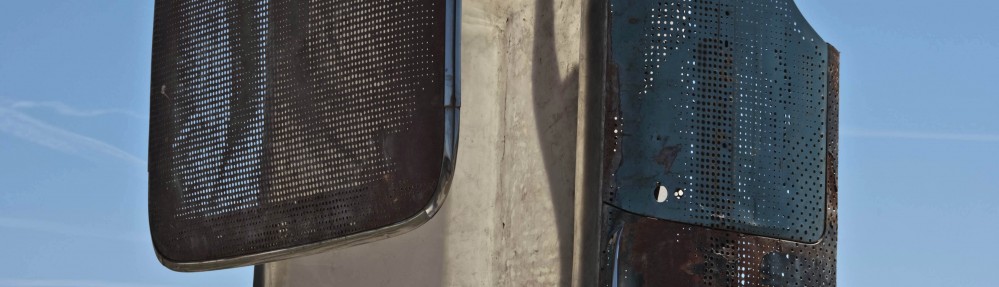
FRAMING THE LANDSCAPE- The body of the salvaged 1959 El Camino is drilled by hand with tens of thousands of holes, turning the car into a ghost of itself. While the automobile has profound impact on our world, it also has altered the way we see this world. The play of light, cast from the Her perforated body onto the translucent fiberglass emphasizes the tentative nature of this machine. Exercises at Carrizo Plain, 2012. Maria's perforated roof and body framing the landscape. In slow motion above the playa. SuperTask #1 (The Steppenwolf). Flying in slow motion above the playa. SuperTask #1 (The Steppenwolf). Satellite image courtesy of GeoEye. The high-lighted square shows the 1/2 mile by 1/2 mile square drawing to the north and east of Black Rock City. The wiggles of the lines reveal the meander of the GPS signal. SuperTask #1 (The Steppenwolf) in process. Following the GPS at a waypoint reveals the meander of the signal. Over the course of about a half hour the signal settles in and stops moving.